Tips to Improve Your Car's Fuel Economy
Petrol and diesel costs are going up and have been for some time now, and with increasing environmental commitments to tackle climate change, this isn’t likely to change. As well as being more mindful about where you fill up your car (ie. by avoiding motorway petrol stations as they seem charge a premium, making them far more expensive), there are plenty of other small changes you can make to your driving style and to your car that will help increase your vehicle’s fuel economy.
Tyre pressure
You should check your tyre pressure regularly and before any long journey, as both over and under-inflated tyres can reduce your car’s fuel economy. Once you’ve found the optimal pressure for your front and back tyres in your vehicle’s user manual, you can either top them up at your local petrol station, or invest in a foot pump with pressure gauge to use at home.
Plan your route in advance
Sounds simple but getting lost will mean you have to travel more miles to get to your destination, in turn this means you will use more diesel/petrol than necessary. Before you set off, make sure you know where you’re going, and check that you’ve picked the most efficient route, with as much motorway as possible. Most Sat-Navs have the option to choose multiple routes based on different criteria such as most economic.
Decrease drag
“Drag” refers to the wind resistance of your vehicle. If there’s a high level of drag, your car will use more fuel as a result. Roof bars, roof boxes and bike racks open are the most common causes of drag, so it’s worth avoiding these wherever possible – even driving with your windows closed can reduce the drag on your vehicle. When removed your car will become more streamlines and in turn more fuel efficient.
Only pack the essentials
The lighter the vehicle, the less fuel it needs to be propelled forwards. Declutter your boot and the backseat, getting rid of anything you don’t need for your journey – from the baby seat to the litre of screen wash you forgot to put in the garage – and you’re sure to see an improvement in MPG.
Observe speed limits
Whether you’re on the single carriageway, motorway or out in the countryside, keep an eye on the speed limit, and don’t exceed it. Travelling at 80mph can use up to 25% more fuel than travelling at 75mph, so it’s well worth going a little slower to save on fuel.
Accelerate and brake gradually
When you notice a higher speed limit coming up, resist the urge to put your foot down, instead accelerate gradually, and if you see a set of traffic lights or a stop sign, don’t wait until the last moment to apply the brakes, but ease off the gas on the approach.
Avoid Air Conditioning
Driving with your air conditioning on directly uses engine power, as does turning up the heat. If you really want to save on fuel, try to avoid using the AC or the heating unless you’re uncomfortably hot or cold.
Cruise control on motorways
Cruise control isn’t especially effective in hilly areas, however it can help to save fuel on long, flat stretches of road where there’s a consistent speed limit – like the motorway. Activating cruise control will help your car to maintain a steady speed, and prevent any sudden, fuel-guzzling acceleration.
Stop/start technology
Most modern vehicles now come with stop/start technology. When enabled, it turns the engine off when your car is at a standstill, reducing both fuel consumption and exhaust emissions in the process. Make the most of this feature by using your handbrake and taking your foot off the clutch when you’re sitting in traffic or stopped at traffic lights, and you will hear your engine cut out, saving fuel.
Drive in high gears if possible
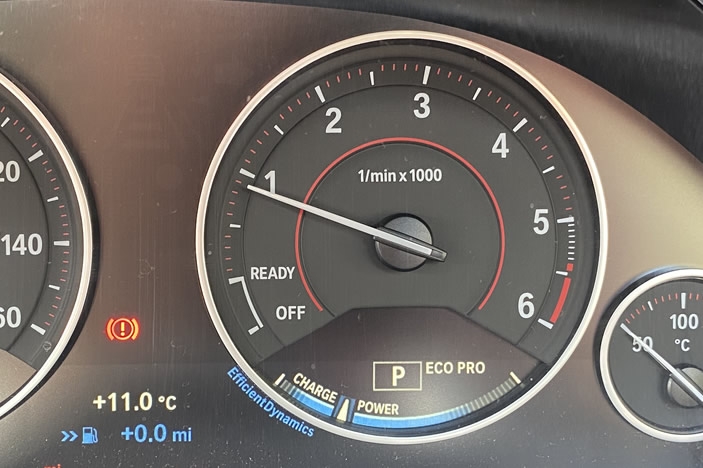
To become more fuel-efficient, one of the best things you can do is to drive in the highest gear you can, whilst remaining within the speed limit. Getting up from first through to fifth quickly whilst keeping revs as low as possible can drastically improve the fuel economy of your car as you are getting the most out of each gear and reducing the ‘revs’ of your vehicle, you can monitor this if you have a rev counter. Some modern vehicles will even indicate to you the best time to change gear.